All Categories
Featured
Table of Contents
"Google, Amazon and Facebook all have various technology-related certifications that can offer trainees a leg up on competition when it comes time to begin looking for tasks." A service technologist is a senior-level specialist who is accountable for ensuring services invest smartly in innovations. These specialists take into consideration the present tech landscape of a company, determine requirements that can be attended to with innovation and supervise the application of this technology.

"I now work across several software application platforms, assisting business to create their own company management options," Munro states."A business technologist function does exist rather extensively however mostly in an extremely particular specialized or with another title," Munro states. "Other similar titles consist of organization expert or a services designer." "The BYOD trend has truly been developing really quick in the work environment during the last couple of years," states Carlos Rodrigo Montagner, IT executive at Merial.
"So it takes some effort for IT departments to arrange that, produce guidelines and to ensure data stability throughout business." Montagner says companies are changing with stronger network security facilities and compliance standards for personal devices. "The large adoption of huge data is making business way more effective at finding and reaching their target audiences," says Pierre de Braux, content strategist at Spiralytics.
Navigating the 2026 Landscape of AI-Cloud TransformationHuge information doesn't always solve a particular problem; it makes us better problem solvers in basic."The more organizations utilize data to improve, the more data they want. This is leading to a big incentive for synthetic intelligence (AI) systems that can analyze the details. "Analytics as we understand is a super time-consuming activity," states Ian Khan, innovation futurist and author.
"The evolution of business innovation is developing brand-new jobs, new industries and new function expertises, so it helps to keep up with the patterns." Discovering these big patterns in organization technology is an excellent way to keep yourself competitive in both company and technology environments. A lot of these modifications and trends in service innovation provide a solid opportunity for experienced professionals to step in and flourish.
Building the Future-Proof AI-Cloud Roadmap
Wish to find out more about a few of the positions poised for success in a digital economy? Have a look at our short article, ".".
As we navigate April 2026, the fundamental elements of digital infrastructure have actually shifted. We are no longer just "relocating to the cloud"; we are managing an intricate web of self-governing systems and distributed intelligence. The "development flywheel" is spinning faster than everbetter technology leads to more information, which brings in more financial investment, additional accelerating facilities advancement.
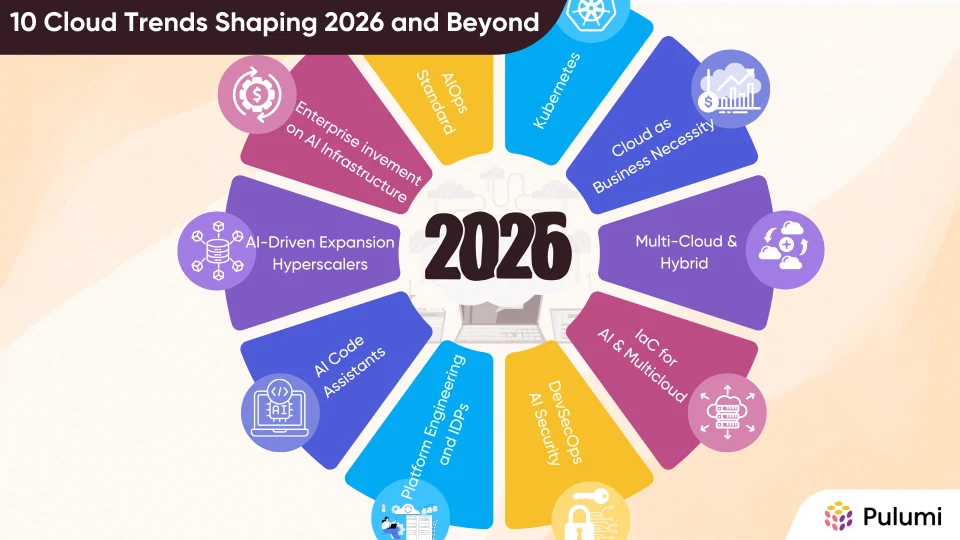
For large-scale business, this acceleration requires a new method to digital exposure. The intersection of future business tech and search presence has actually become the main battlefield for market share.
This shift is crucial for SEO strategies that perform well for big business. By deploying SLMs to investigate and improve internal data structures, companies can ensure that their digital footprint is optimized for both human users and the AI-driven spiders that now dominate the search landscape.
Unlike basic chatbots that await a timely, AI agents are goal-oriented. They do not just "chat"; they do. A representative can be provided a high-level goal"Optimize our Q3 supply chain for expense"and it will autonomously examine vendors, negotiate costs, and update inventory logs, only asking for human approval at important choice points.
Mastering the Future 2026 Convergence
For a business with a million-page site, manual auditing is impossible. Moving from pilot to production stays a hurdle.
, these multiagent systems will become the "silicon workforce" that deals with regular operations, enabling humans to focus on top-level method. This technique must include a robust SEO part, as the exposure of these automated services identifies their ultimate utility in a competitive market.
For smaller sized services, "Robotics-as-a-Service" (RaaS) designs have actually made this innovation accessible without massive upfront capital. By integrating ai powered analytics, these makers don't simply move boxesthey predict maintenance needs and optimize paths in real-time. This isn't simply about replacing labor; it has to do with attaining an operational impact that was physically impossible for people alone.
To power these AI "brains" and robotic "bodies," the underlying skeleton of businessIT infrastructurehas had to evolve. International cloud costs has struck a huge $1.3 trillion, but the trend isn't just "all-in" on public cloud. Instead, we are seeing the dominance of and. For big companies, facilities speed is a direct ranking element.
Mastering the Future AI Landscape
HCI integrates compute, storage, and networking into a single software-defined platform. This permits companies to have the dexterity of the cloud with the security and "immediacy" of on-premises hardware.
Looking toward completion of the decade, the landscape ends up being even more decentralized and sustainable. We are moving away from the "move quick and break things" age into an age of "move quickly and sustain things." This shift is especially apparent in how big companies manage their digital presence. SEO is no longer a siloed marketing function; it is a core part of the business technology stack, needing deep integration with data science and infrastructure teams.
Unlike smaller websites, enterprise websites often deal with millions of URLs, complicated internationalization, and tradition subdomains. To carry out well, these companies must focus on 3 crucial pillars: Programmatic SEO, Technical Crawl Efficiency, and E-E-A-T (Experience, Proficiency, Authoritativeness, and Reliability) at scale. includes utilizing data-driven design templates to create top quality, helpful pages for countless long-tail search queries.
The key is guaranteeing that these pages offer real value and are not simply "entrance pages," which search engines now punish heavily. By leveraging the SLMs discussed earlier, big companies can generate unique, contextually pertinent content for these pages that satisfies both user intent and search algorithms. is the 2nd pillar.
Is Your Enterprise Ready for AI Transformation?
Future-ready enterprises utilize advanced server-side making and edge SEO to deliver pre-rendered pages to bots, ensuring that every second of crawl time is invested in revenue-generating material. Carrying out a robust internal linking structure using AI-driven suggestions can help distribute "link equity" more efficiently throughout an enormous domain. requires a centralized method to brand name authority.

Latest Posts
Essential Steps to Realizing Successful Digital Transformation
Key Steps to Achieving Full Digital Transformation
Future-Proofing Your Business With Cloud-Native Tools